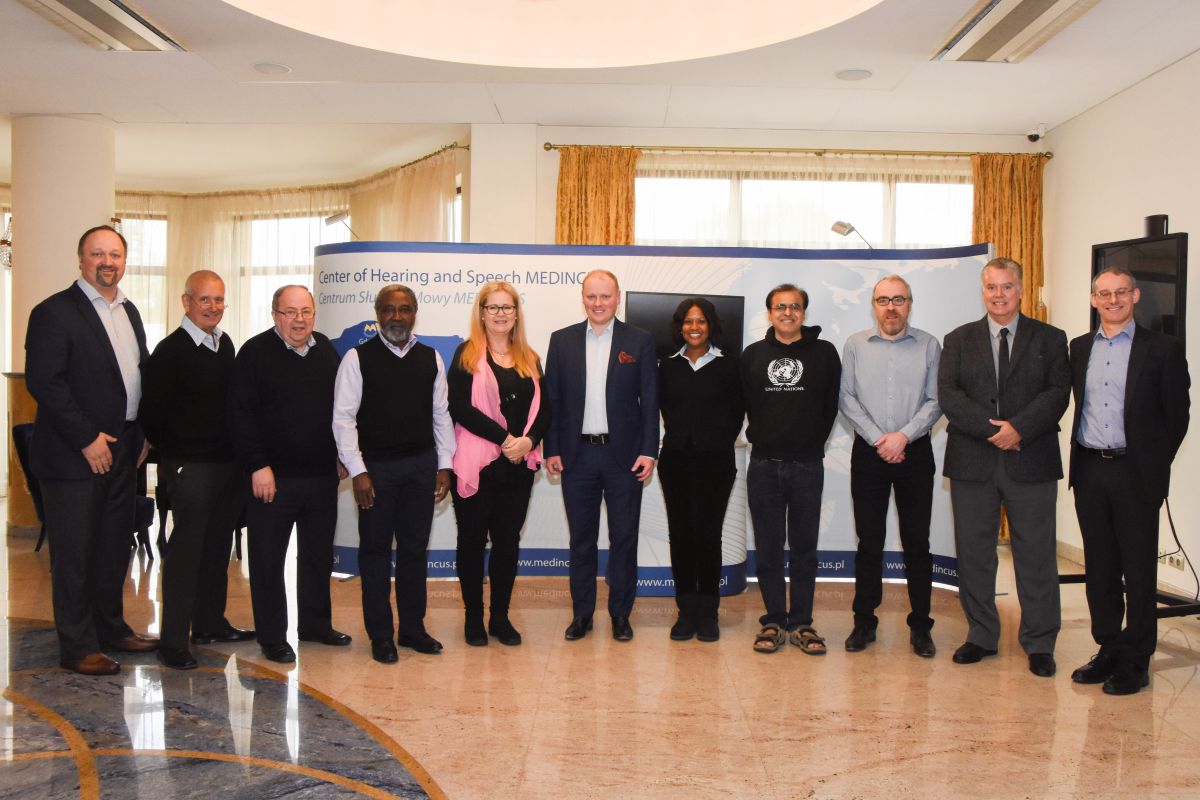
Improving access to telemedicine services and introducing consistent, universal principles for eHealth training and certification are the key priorities agreed by the Board of the International Society for Telemedicine and e-Health, a WHO partner organisation, following its meeting in Poland. Associate Professor Piotr H. Skarżyński, MD, PhD, chaired the meeting.
On 18–19 February, Kajetany near Warsaw hosted the international society’s first board meeting in Poland. Associate Professor Piotr H. Skarżyński, MD, PhD, MSc, elected Vice-Chairman of the Board, chaired it. At the inauguration of the new term, the Board agreed priorities for the coming years: intercontinental teleconsultation projects, improved access to telemedicine within national regulations, and greater universality of solutions such as eHealth training certificates.
ISfTeH board meetings provide a forum for exchanging experience, discussing telemedicine and eHealth worldwide and at continental, international and national levels, and developing new solutions primarily intended to protect patients’ lives and health. The society’s varied activities also enable cooperation with domestic and international institutions in research, clinical practice, teaching and organisation across telemedicine and its subfields.
The International Society for Telemedicine and eHealth is a WHO partner. Its main mission is to promote and support telemedicine and eHealth worldwide, particularly in developing countries. It supports national societies and organisations and already cooperates with over 90 countries. Only three Polish institutions belong: the Institute of Physiology and Pathology of Hearing, the Institute of Sensory Organs and the MEDINCUS Center of Hearing and Speech.
Its educational objectives include easier access to knowledge and publications on telemedicine and a platform for specialists to share experience. ISfTeH has numerous advisory groups supporting education, medical informatics and bioinformatics, teleaudiology, telenursing, teledentistry, teledermatology, teleophthalmology, chronic disease management and the training of students and young doctors.